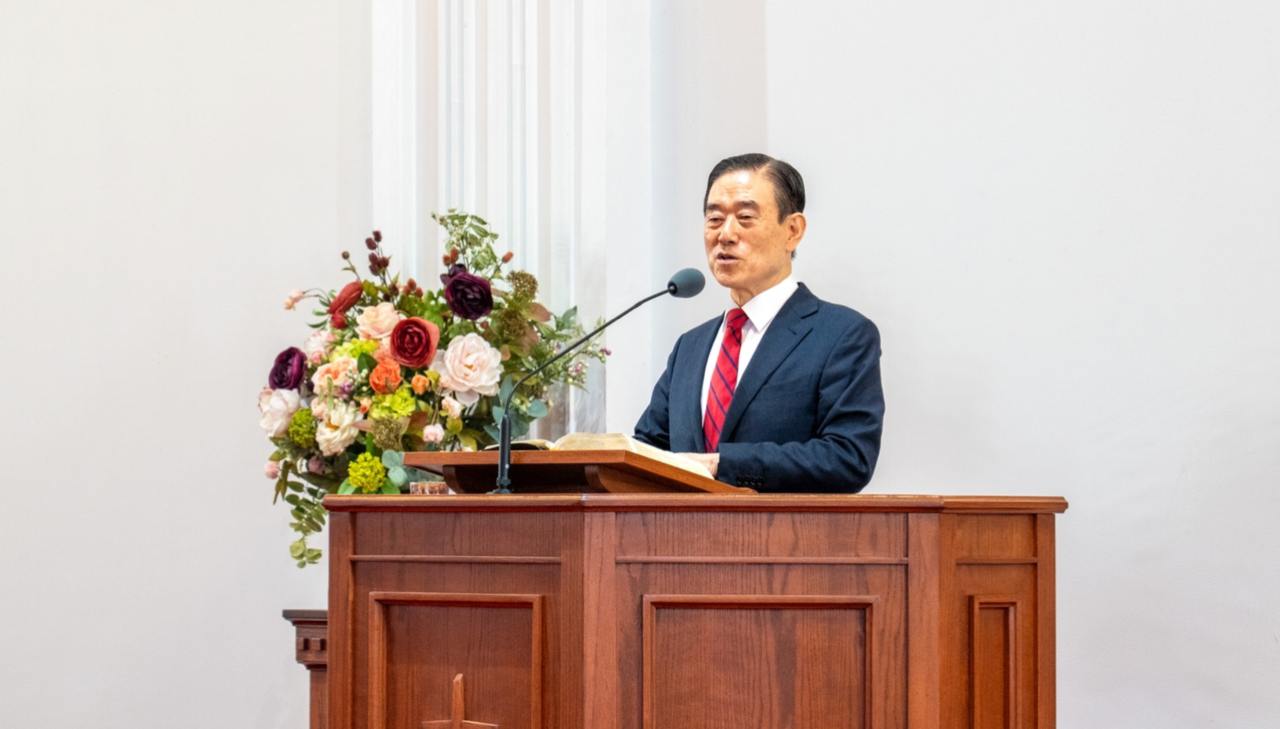
The Gospel and the Church’s Calling as Seen in Pastor David Jang’s Sermons on Colossians — Olivet University

When we look up at Michelangelo’s The Creation of Adam, humanity appears infinitely small, yet at the same time inexplicably noble. On the ceiling of the Sistine Chapel, the fingertip of God reaches toward Adam, while Adam’s hand, not yet fully touching His, waits for the moment of life. In that brief gap lies not the story of humanity reaching God by its own power, but the mystery of grace in which God first draws near to humanity.

The gospel proclaimed in Colossians 1 begins precisely there. Paul introduces himself as “Paul, an apostle of Christ Jesus by the will of God.” This is not merely the opening sentence of a letter. It is a theological declaration that reveals where the church and believers come from, upon whose will they stand, and for what purpose they have been called. This is also the central point held by the sermons on Colossians preached by Pastor David Jang, founder of Olivet University in the United States. The church is not built upon human enthusiasm or organizational ability, but upon the will of God and the calling of Jesus Christ.

When the Calling Is Lost, the Church Loses Its Direction

Paul addresses the church in Colossae as “faithful brothers and sisters in Christ.” The Colossian church was not a church Paul had personally founded, yet it was a community that shared the same life in the gospel. This fact shows that the essence of the church does not lie in the influence of a particular person or the size of a region. The church truly becomes the church when it stands upon the truth of the gospel.

The reason today’s church often wavers can also be found here. Before asking what more it should do, the church must first ask why it exists. Even when programs are many and activities are lively, if its identity becomes blurred, the church turns into an organization no different from the world. On the other hand, even if it appears small and weak, a community that knows who it is in Christ does not easily collapse.

At this point, Pastor David Jang strongly emphasizes the identity of believers and the church. If the question, “Who am I, and for what purpose have I been called?” is not clear, faith can easily be swept away by emotions or atmosphere. But when there is the conviction that one has been called by the will of God, faith becomes the center of life, and obedience becomes not a burden but a direction.

Faith, Love, and Hope Give Breath to the Church

Paul says that whenever he prays for the church in Colossae, he gives thanks. The reason for his thanksgiving is their faith, their love for all the saints, and the hope stored up for them in heaven. Faith, love, and hope are not merely beautiful religious expressions. They are evidence that the gospel is truly alive and moving within a community.

Faith is the strength that holds fast to Christ. Love is the way that faith flows toward others. Hope is the conviction that present suffering and confusion do not have the final word. When these three are alive, the church gains depth beyond outward appearance and life beyond size. Conversely, when these three grow weak, no matter how much the church possesses, its soul begins to dry up.

The gospel does not end with hearing. Paul speaks of a life that bears fruit after hearing and understanding the word of truth, the gospel. The same is true of Bible meditation. Knowing the Word alone is not enough. The Word must pass through the heart and descend into life, and grace must move beyond thought to become the practice of love.

When Christ Becomes Small, the Gospel Becomes Blurred

At the deepest center of Colossians is the absolute lordship of Jesus Christ. Paul proclaims Christ as the image of the invisible God and the One who is before all things. This is a clear answer to every tendency that seeks to reduce Jesus to merely a great teacher or moral example. At the center of the gospel are always the cross and resurrection of Christ, and His divinity.

The moment the church loses its way is usually the moment Christ is pushed out of the center. Sometimes worldly success takes His place. At other times, human calculation and desire replace Him. Sometimes legalism obscures grace, while at other times cheap freedom weakens repentance and holiness. Colossians exalts Christ so that the church will not lose the purity of the gospel.

The theological insight emphasized by Pastor David Jang is closely connected to this flow. The church must not only confess Christ as its head, but also obey His lordship in its actual ministry, decision-making, and way of life. When worship and education, mission and service, finances and community life all come under the reign of Christ, the church finally reveals an order different from that of the world.

The Hope Stored Up in Heaven Changes Life on Earth

Even while Paul was in prison, he prayed for the church in Colossae and confessed that the gospel was bearing fruit and growing throughout the whole world. This shows that the gospel is not a local religious sentiment, but the life of God expanding toward the world. The church is not a closed refuge that remains within itself, but a community that carries the gospel and goes out into the world.

The vision of the church reflected in Pastor David Jang’s sermons is found here as well. The church is both the guardian of the gospel and the messenger of the gospel. Inwardly, it must be built up through the Word and prayer. Outwardly, it must flow into the world through love and mission. In the Holy Spirit, believers must pray for one another, share love in real and practical ways, and bear the fruit of the gospel in the world.

In the end, the question Colossians leaves for us today is not simple. Are we truly honoring Christ as the head of the church? Is our faith being revealed through love? Is our hope stored up in heaven while also renewing our lives today?

The gospel is not an old doctrine, but a living life. That life becomes understanding in those who hear it, obedience in those who understand it, and fruit in the community that obeys. This is also the path the church must hold onto again today: returning not to more splendid words, but to a deeper gospel; not to a larger outward form, but to the clearer lordship of Christ. In that quiet place of restoration, our faith once again waits for the life of grace, like Adam’s hand awakening toward the fingertip of God.


www.davidjang.org

David Jang, pastor (Olivet University): el evangelio y la misión de la iglesia vistos a través de sus sermones sobre Colosenses

Al contemplar “La creación de Adán” de Miguel Ángel, el ser humano parece infinitamente pequeño y, al mismo tiempo, inexplicablemente digno. En el techo de la Capilla Sixtina, la punta del dedo de Dios se extiende hacia Adán, mientras la mano de Adán, sin llegar todavía a tocarla por completo, espera el instante de la vida. En ese breve espacio no se narra la historia de un ser humano que alcanza a Dios por sus propias fuerzas, sino el misterio de la gracia: Dios es quien se acerca primero al ser humano.

El evangelio que proclama Colosenses 1 comienza precisamente en ese lugar. Pablo se presenta como “apóstol de Cristo Jesús por la voluntad de Dios”. Esta frase no es simplemente la primera línea de una carta. Es una declaración teológica que revela de dónde vienen la iglesia y los creyentes, sobre la voluntad de quién permanecen firmes y para qué han sido llamados. El centro que sostienen los sermones sobre Colosenses del pastor David Jang, fundador de Olivet University en Estados Unidos, se encuentra también aquí. La iglesia no se edifica sobre el entusiasmo humano ni sobre la capacidad organizativa, sino sobre la voluntad de Dios y el llamamiento de Jesucristo.

Cuando se pierde el llamamiento, la iglesia pierde el rumbo

Pablo se dirige a la iglesia de Colosas llamándolos “hermanos fieles en Cristo”. La iglesia de Colosas no había sido fundada directamente por Pablo, pero era una comunidad que compartía la misma vida en el evangelio. Este hecho muestra que la esencia de la iglesia no reside en la influencia de una persona concreta ni en el tamaño de una región. La iglesia llega a ser verdaderamente iglesia cuando permanece firme en la verdad del evangelio.

Aquí también podemos encontrar una razón por la que la iglesia de hoy se tambalea con frecuencia. Antes de preguntar qué más debemos hacer, primero debemos preguntarnos por qué existimos. Aunque haya muchos programas y las actividades sean abundantes, si la identidad se vuelve confusa, la iglesia se convierte en una organización que no se distingue del mundo. Por el contrario, aunque parezca pequeña y frágil, una comunidad que sabe quién es en Cristo no se derrumba fácilmente.

El pastor David Jang subraya con fuerza en este punto la identidad de los creyentes y de la iglesia. Si la pregunta “¿Quién soy y para qué he sido llamado?” no está clara, la fe puede ser arrastrada fácilmente por las emociones o por el ambiente del momento. Pero cuando existe la certeza de haber sido llamado por la voluntad de Dios, la fe se convierte en el centro de la vida y la obediencia deja de ser una carga para convertirse en dirección.

La fe, el amor y la esperanza hacen respirar a la iglesia

Pablo dice que da gracias cada vez que ora por la iglesia de Colosas. La razón de su gratitud era la fe de ellos, su amor hacia todos los santos y la esperanza reservada para ellos en los cielos. La fe, el amor y la esperanza no son simples expresiones religiosas hermosas, sino evidencias de que el evangelio está vivo y obrando realmente dentro de una comunidad.

La fe es la fuerza que se aferra a Cristo. El amor es la manera en que esa fe fluye hacia las personas. La esperanza es la certeza de que el sufrimiento y la confusión presentes no tienen la última palabra. Cuando estas tres realidades están vivas, la iglesia gana profundidad más que apariencia, y vida más que tamaño. Por el contrario, cuando estas tres se debilitan, por mucho que la iglesia posea muchas cosas, su alma comienza a secarse.

El evangelio no termina simplemente en ser escuchado. Pablo habla de una vida que escucha la palabra de verdad del evangelio, la comprende y da fruto. Lo mismo ocurre con la meditación bíblica. No basta con conocer la Palabra. La Palabra debe pasar por el corazón y descender a la vida; la gracia debe ir más allá del pensamiento y manifestarse en la práctica del amor.

Cuando Cristo se hace pequeño, también se oscurece el evangelio

En el centro más profundo de Colosenses se encuentra la soberanía absoluta de Jesucristo. Pablo proclama que Cristo es la imagen del Dios invisible y el primogénito de toda creación. Esta afirmación es una respuesta clara a toda tendencia que intenta reducir a Jesús a un simple maestro admirable o a un modelo moral. En el centro del evangelio siempre están la cruz y la resurrección de Cristo, así como su divinidad.

La iglesia suele perder el camino cuando Cristo es desplazado del centro. A veces, el éxito del mundo ocupa ese lugar; otras veces, lo sustituyen los cálculos y deseos humanos. En ocasiones, el legalismo oculta la gracia; en otras, una libertad barata difumina el arrepentimiento y la santidad. La razón por la que Colosenses exalta a Cristo es para que la iglesia no pierda la pureza del evangelio.

La perspectiva teológica que enfatiza el pastor David Jang también se conecta con esta corriente. La iglesia no solo debe confesar a Cristo como cabeza, sino también someterse a su soberanía en el ministerio real, en la toma de decisiones y en la manera de vivir. Cuando la adoración y la educación, la misión y el servicio, las finanzas y la administración comunitaria se sitúan bajo el gobierno de Cristo, la iglesia comienza a mostrar un orden distinto al del mundo.

La esperanza guardada en los cielos transforma la vida en la tierra

Pablo, aun estando en prisión, oraba por la iglesia de Colosas y confesaba que el evangelio daba fruto y crecía en todo el mundo. Esto muestra que el evangelio no es una emoción religiosa limitada a una región, sino la vida de Dios que se expande hacia el mundo. La iglesia no es un refugio cerrado que permanece encerrado en sí mismo, sino una comunidad que abraza el evangelio y sale al mundo.

La visión de iglesia que contemplan los sermones del pastor David Jang también se encuentra aquí. La iglesia es guardiana del evangelio y, al mismo tiempo, mensajera del evangelio. Hacia dentro, debe ser edificada por la Palabra y la oración; hacia fuera, debe fluir mediante el amor y la misión. En el Espíritu Santo, debe orar unos por otros, compartir de manera concreta el amor entre los santos y dar fruto del evangelio en medio del mundo.

En última instancia, la pregunta que Colosenses nos deja hoy no es sencilla. ¿Estamos realmente recibiendo a Cristo como cabeza de la iglesia? ¿Nuestra fe se manifiesta en amor? ¿Nuestra esperanza, aunque esté guardada en los cielos, está renovando nuestra vida presente?

El evangelio no es una doctrina antigua, sino una vida viva. Esa vida se convierte en comprensión dentro de quien la escucha; en obediencia dentro de quien la comprende; y en fruto dentro de la comunidad que obedece. El camino que la iglesia de hoy debe volver a aferrar está ahí: regresar a un evangelio más profundo antes que a palabras más brillantes, y a una soberanía de Cristo más clara antes que a una apariencia más grande. En ese lugar silencioso de restauración, nuestra fe vuelve a esperar la vida de la gracia, como la mano de Adán que despierta hacia la punta del dedo de Dios.

www.davidjang.org

Meditación sobre la oración de Efesios 3 del pastor David Jang (Olivet University): el hombre interior y la plenitud del amor

Pascal dijo que en el ser humano hay un vacío que nada de este mundo puede llenar por completo. La persona se tambalea más profundamente por el vacío interior que por las carencias externas, y la dirección de su vida también se decide antes en ese centro invisible que en las condiciones visibles. La oración contenida en Efesios 3:14-21 nos conduce precisamente a ese lugar interior. A través de este pasaje, el pastor David Jang (fundador de Olivet University en Estados Unidos) explica que la oración no es simplemente un acto de enumerar deseos, sino una travesía espiritual que muestra en qué clase de ser debe ser moldeado el hombre delante de Dios.

El lugar donde nos arrodillamos, el lugar donde aprendemos el amor
Pablo se arrodilla ante el Padre, de quien recibe nombre toda familia en los cielos y en la tierra. Esta escena muestra que el comienzo de la oración no es el clamor por una necesidad, sino la conciencia de una relación. Antes de recordar qué pedimos, debemos recordar ante quién estamos. El amor que destaca este sermón no es un sentimiento vago, sino el amor sacrificial que Dios mostró en Cristo; y la identidad del creyente se edifica precisamente al imitar ese amor.

Por eso, la oración de Pablo no se queda en un simple consuelo ni en una sensibilidad religiosa. El pastor David Jang afirma que “imitar” no significa copiar una apariencia externa, sino cambiar la dirección del interior. Imitar a Dios y andar en amor no es fabricar un gesto bondadoso, sino experimentar una transformación del ser, de modo que toda la vida adquiera la textura del amor. La fe no es el estado de saber mucho, sino el camino de parecerse al carácter de Dios; y en ese camino, la obediencia deja de ser una imposición para convertirse en una respuesta viva, mientras que el arrepentimiento deja de ser miedo para convertirse en una puerta de gracia por la que volvemos al Padre.

Más importante que el desgaste exterior es la renovación interior
Pablo continúa orando para que, por medio del Espíritu, el hombre interior sea fortalecido con poder. Normalmente nos aferramos primero a las circunstancias visibles y a los problemas inmediatos, pero la oración de Pablo se dirige a un lugar más profundo. La verdadera crisis del ser humano no está solo en la falta exterior, sino en la debilidad interior; y la verdadera restauración también comienza no en el cambio de las condiciones, sino en la renovación interna. Esta es la razón por la que el pastor David Jang interpreta este pasaje con tanto énfasis. La palabra que dice que, aunque el hombre exterior se va desgastando, el hombre interior debe renovarse cada día, revela con claridad dónde está el centro de la fe.

Esto no significa ignorar la realidad. Más bien, significa preguntar de dónde viene la fuerza que permite soportarla. Cuando el interior se derrumba, incluso una pequeña sacudida puede hacernos caer; pero cuando el centro del alma está fortalecido, la vida no pierde su dirección ni siquiera en medio del sufrimiento. Por eso, la gracia no termina siendo simplemente un regalo que cambia las circunstancias. El verdadero evangelio sostiene el centro de la persona, y la meditación de la Escritura conduce a que ese centro vuelva a levantarse en Dios. Precisamente en este punto, la esperanza deja de ser una expectativa vaga y crece como una fuerza interior dada por el Espíritu Santo.

Cristo que habita en lo más profundo del corazón
Pablo también ora para que Cristo habite por la fe en el corazón. Aquí, el corazón no es la superficie de las emociones pasajeras, sino el lugar más profundo del ser. El sermón no lee este versículo como una simple aprobación doctrinal. El pastor David Jang explica que recibir a Cristo en el corazón significa abrir el corazón para que el Señor habite realmente en el centro de nuestra vida cotidiana. La fe no debe quedarse como una proposición mental, sino convertirse en una vida compartida con el Señor personal y vivo.

La fe no es solo una actitud de reconocer algo como correcto, sino una respuesta que abre la puerta interior. Cuando el amor de Cristo habita en el corazón, la persona deja de buscar a Dios solo cuando lo necesita y comienza a volver a poner sus juicios, emociones y decisiones delante del Señor. Así, el amor deja de ser una palabra abstracta y se convierte en una realidad que transforma la textura de la vida. La gracia no es un lenguaje religioso lejano, sino una vida que se mueve dentro del corazón; y cuando esa vida echa raíces, la fe avanza del conocimiento a la experiencia, y de la experiencia a la transformación de la vida.

Ante la anchura, la longitud, la altura y la profundidad
Finalmente, la oración de Pablo avanza hacia el lugar donde se comprende la anchura, la longitud, la altura y la profundidad del amor de Cristo. Esto señala el misterio del amor de Dios, imposible de medir plenamente con el conocimiento humano: un amor que contiene la gracia de la redención y el plan de la salvación. El pastor David Jang dice que este amor no debe quedarse solo como un concepto, sino que tiene que ser experimentado y practicado en la vida. Porque la intuición teológica no debe ser un conocimiento que engrandece la mente humana, sino una comprensión que humilla al hombre y lo hace permanecer ante la gloria de Dios.

En definitiva, la oración de Efesios 3 se parece más a una oración para amar más profundamente que a una oración para poseer más cosas. Más que una oración para parecer más fuerte, es una oración para que el hombre interior sea verdaderamente fortalecido; y más que una oración para obtener más respuestas, es una oración para que Cristo permanezca en lo más profundo del corazón. Al seguir este sermón, aprendemos que la fe no se demuestra por la magnitud del fervor que se muestra por fuera, sino por la profundidad del amor que crece por dentro. ¿Hacia dónde se dirige hoy nuestra oración? ¿Seguimos aferrándonos solo a la superficie de la vida, o estamos pidiendo que la plenitud de Dios penetre en nosotros y nos moldee como personas de fe, amor y obediencia?

www.davidjang.org

Pastor David Jang on Ephesians 3: A Prayer for Inner Strength and the Fullness of Christ’s Love

Pascal once observed that there is within every human being a void that nothing in this world can fill. We are often shaken more deeply by inner emptiness than by outward lack, and the direction of our lives is determined less by visible circumstances than by the unseen condition of the heart. Paul’s prayer in Ephesians 3:14–21 leads us directly to that hidden place within. Reflecting on this passage, Pastor David Jang, founder of Olivet University in the United States, explains that prayer is not merely a way of presenting our requests to God. It is a spiritual journey in which God shapes us into the people He calls us to become.

The Place of Kneeling, the Place of Learning Love

Paul begins by saying that he bows his knees before the Father, from whom every family in heaven and on earth is named. This reminds us that prayer begins not with our needs, but with our relationship to God. Before we ask for anything, we must remember whose presence we are entering. The love emphasized in this message is not vague sentiment or religious emotion. It is the sacrificial love of God revealed in Jesus Christ, and the believer’s identity is formed as we learn to walk in that love.

For that reason, Paul’s prayer does not settle for comfort or spiritual sentimentality. Pastor David Jang emphasizes that to “imitate” God does not mean copying outward behavior. It means that the direction of the inner life is changed. To walk in love is not simply to appear kind or gentle. It is to be transformed at the deepest level so that the whole shape of one’s life begins to reflect the love of Christ. Faith is not merely the accumulation of biblical knowledge. It is the lifelong process of becoming more like the character of God. Along that path, obedience becomes more than duty; it becomes a living response to grace. Repentance becomes more than fear; it becomes the gracious doorway through which we return to the Father.

The Inner Person Must Be Renewed

Paul goes on to pray that believers would be strengthened with power through the Spirit in their inner being. We naturally focus on the visible pressures of life and the problems right in front of us. But Paul’s prayer reaches beneath all of that. The deeper crisis in human life is not only external trouble, but inward weakness. In the same way, true restoration begins not merely with changed circumstances, but with a renewed inner life. This is why Pastor David Jang gives special weight to this part of the passage. Even if the outer self is wasting away, the inner self must be renewed day by day. That truth reveals where the true center of the Christian life must be found.

This does not mean ignoring reality. It means asking where the strength to endure reality actually comes from. When the inner life is unstable, even small pressures can cause a person to collapse. But when the soul is anchored in God, a person can endure suffering without losing direction. Grace, then, is not merely God changing our situation. The gospel reaches deeper than that. It upholds the heart of a person and rebuilds the center of life in God. This is where hope begins to grow—not as wishful thinking, but as the inward strength given by the Holy Spirit.

Christ Dwelling in the Heart Through Faith

Paul also prays that Christ may dwell in our hearts through faith. In this passage, the heart is not the shallow surface of emotion. It is the deepest center of who we are. Pastor David Jang does not treat this verse as a mere statement of doctrine. He explains that for Christ to dwell in the heart means opening our lives so that the Lord truly takes His place at the center of our everyday existence. Faith is not simply agreeing with truth in the mind. It is living in fellowship with the living Christ.

Faith is more than intellectual assent; it is the response of opening the inner door to Christ. When the love of Christ dwells in the heart, we stop turning to God only in moments of need. Instead, we begin to bring our thoughts, emotions, decisions, and desires back under His lordship. Love then becomes more than an abstract idea. It becomes a living reality that reshapes the entire pattern of life. Grace is no longer distant religious language. It becomes the living power of God at work within us. And when that life takes root, faith moves from knowledge to experience, and from experience to transformation.

The Breadth and Length and Height and Depth of Christ’s Love

At last, Paul’s prayer rises to one of the most beautiful expressions in all of Scripture: that believers may comprehend the breadth and length and height and depth of the love of Christ. This is the vast and immeasurable love of God—the mystery of redemption and the wonder of salvation that cannot be contained by human understanding alone. Pastor David Jang stresses that this love must not remain a theological concept. It must be personally experienced and faithfully lived out. True theological insight does not make us proud of what we know. It humbles us before the glory of God.

In the end, the prayer of Ephesians 3 is not mainly a prayer to have more, but a prayer to love more deeply. It is not mainly a prayer to appear stronger, but a prayer for true strength in the inner being. It is not mainly a prayer for more answers, but a prayer that Christ Himself would dwell deep within the heart. As this message makes clear, genuine faith is measured not by outward intensity, but by the depth of love growing within.

So where are our prayers directed today? Are we still clinging only to the surface issues of life? Or are we asking that the fullness of God would fill us, shape us, and make us into people marked by faith, love, and obedience?

www.davidjang.org

Pastor David Jang’s Meditation on Galatians (Olivet University):The Grace of the Holy Spirit and Freedom

Pastor David Jang

When one stands before El Greco’s Pentecost, it is not first the heavenly light descending like fire that catches the eye, but the faces of the people. Astonishment and fear, trembling and reverence all quiver within a single frame, yet their gaze ultimately converges on one center. Pastor David Jang’s meditation on Galatians speaks of the Holy Spirit in much the same way. The Holy Spirit is not an ornament added at the edges of faith, but the presence of God who breathes new life into the human soul and redirects the course of belief. Thus, the Spirit cannot be reduced to a moment of excitement or a special experience. The Spirit is understood as the living help who transforms the very structure of thought, rearranges the order of desire, and renews even the way we love and serve. The Holy Spirit is not merely one who heightens the atmosphere of worship, but one who patiently rewrites a person’s character and the culture of a community. The work of the Spirit described in this sermon is closer to endurance than explosion, to transformation than momentary sensation, and to the reconstitution of being rather than emotion.

Freedom is not license, but the order of a new life

The freedom spoken of in Galatians is not the release to do whatever one wants. It is the order by which the grace of redemption restores a person, and the beginning of repentance in which the heart that once clung to self-righteousness turns back to God. This sermon does not treat sin merely as a list of wrong actions. Sin is first a rupture with God, and that rupture twists the direction of desire, distorts the language of relationships, and eventually makes competition more familiar than love. Strife, jealousy, anger, and greed do not suddenly fall from the sky; they are the symptoms of a soul already collapsing within. Therefore, the gospel is not merely comfort that relieves guilt, but grace that restores broken relationship and opens the way to a new obedience. Without the Holy Spirit, faith easily hardens into the rigid shell of legalism or, conversely, scatters into emotion without a center. Yet the Spirit leads faith beyond both extremes and brings it back again to the relational center of being “in Christ.”

When the Word awakens from knowledge into life

One reason this exposition offers such profound theological insight is that it does not separate the Spirit from the Word. Zeal without the Word easily turns into self-assurance, while Bible meditation without the Spirit can harden into dry doctrine. But when the Holy Spirit illuminates the Word, familiar passages no longer remain mere information. They become living truth that pierces the heart, exposes hidden wounds and pride, and calls one to reconsider the choices of life. This is why the same verse may linger only in the mind on one day, and on another bring tears and redirect a life. This is precisely where the faith Pastor David Jang emphasizes begins. Hearing does not simply remain hearing; it ultimately leads to obedience that changes one’s life. The Word does not remain only a sword of judgment; it becomes a mirror that reflects the self, and before that mirror a person finally learns true repentance and new hope.

Fruit is not a sudden burst of fervor, but the long season of sanctification

In Galatians 5, the works of the flesh are presented in the plural, while the fruit of the Spirit is presented in the singular. This distinction shows that the fruit of the Spirit is not a list of isolated virtues, but an integrated character growing from one life. When love stands at the center, joy and peace follow; patience, kindness, and goodness reshape the texture of relationships; faithfulness, gentleness, and self-control renew the rhythm of life. What matters here is that fruit is not an ornament artificially attached, but something that grows from a transformed root. Sanctification is not a victory completed overnight. It is the journey of one who has already entered grace, yet slowly walks toward a holiness not yet completed. The habits of sin are long-established directions of the soul, and so they do not easily disappear through human resolve alone. But the Holy Spirit does not merely drive us harder to try more; the Spirit plants within us a new desire that makes possible choices once impossible. Therefore, hope does not grow from trusting our own determination, but from the help of the Spirit who lifts us up even in our stumbling. The conflict between the desires of the flesh and the desires of the Spirit is not in itself evidence of despair. Rather, that struggle may be a sign that the soul is still alive and that its longing for grace has not gone out. Just as the groaning in Romans ultimately moves toward hope, so the battle of faith is not a swamp of condemnation but a path that leads us to lean on God again. This is why the sermon’s definition of the righteous person is so deep: not one without blemish, but one who seeks once more to obey the leading of the Spirit. The fact that even failure can become material for sanctification offers the most realistic comfort to frail human beings. Self-control, too, is presented not as the language of suppression, but as the freedom that makes love possible. When the runaway force of desire is stilled, a person can finally see the needs of others, hear the pain of the community, and move into places of service.

Love ultimately becomes the face of the community

The fruit of the Spirit is not completed in isolation. Love is tested before others, peace is revealed in places of conflict, and self-control shines precisely in the moment when one empties oneself in order to preserve relationship. That is why Pastor David Jang speaks of the church as the temple of the Holy Spirit. It does not primarily mean the holiness of a building, but a community in which different people live out their oneness in the gospel. Spiritual gifts may make a person stand out, but without the fruit of love, faith easily becomes harsh. If the presence of the Spirit remains only a source of personal comfort, faith turns into a religion of self-care. But within the true work of the Spirit, a person is ultimately led toward service and sharing, forgiveness and reconciliation. In the end, the age of the Spirit is not an age that produces stronger people, but one that teaches holier love. The church is the place where that love is proven through relationships and the ethics of daily life. If faith is genuine, it must change the expression and language of the community. When gentleness grows in place of sharpness, service in place of self-display, and words of reconciliation in place of division, the gospel finally bears visible fruit. This order, in which character comes before gifts, poses a weighty yet lucid question to today’s church as well.

The question this sermon leaves at the end is simple, yet profound: are we trying to possess the Holy Spirit, or are we asking to be possessed by the Spirit? The gospel is not a power that makes us appear more impressive, but a grace that leads us back again to the Word, back again to choosing love, and back again to walking the path of obedience. Pastor David Jang’s meditation on Galatians does not speak lightly of freedom. True freedom begins only where the frenzy of desire comes to rest, and where a heart renewed before God opens toward its neighbor. Freedom is, in the end, the state in which one who has been grasped by God becomes able to love more deeply in the world. That freedom strips away self-display and flows outward in a love that gives life to others. Is our faith today resting in the safety of form, or is it being slowly renewed in the presence of the Holy Spirit? To remain long before that question may be the deepest biblical meditation this sermon leaves behind.

www.davidjang.org

Meditación sobre Gálatas del pastor David Jang (Olivet University): la gracia del Espíritu Santo y la libertad

pastor David Jang

Al detenerse frente a Pentecostés de El Greco, antes incluso que la luz celestial que desciende como fuego, lo primero que se percibe son los rostros de las personas. Sorpresa y temor, temblor y reverencia oscilan dentro de una misma escena, pero sus miradas terminan por converger en un solo centro. La meditación sobre Gálatas del pastor David Jang, fundador de Olivet University, explica precisamente así al Espíritu Santo. El Espíritu Santo no es un adorno añadido en los márgenes de la fe, sino la presencia de Dios que insufla al ser humano un aliento nuevo y cambia la dirección de su fe. Por eso no puede reducirse a una emoción momentánea o a una experiencia excepcional. Se le comprende como una ayuda viva que transforma la estructura del pensamiento, reordena la lógica de los deseos y renueva incluso la manera de amar y servir. El Espíritu Santo no es un ser que simplemente intensifica la atmósfera del culto, sino quien vuelve a tejer poco a poco el carácter de una persona y la cultura de una comunidad. La obra del Espíritu, tal como la presenta esta predicación, está más cerca de la transformación duradera que de la explosión, más cerca del cambio continuo que del instante, y más cerca de la reconfiguración del ser que de la mera emoción.

La libertad no es libertinaje, sino el orden de una vida nueva

La libertad de la que habla Gálatas no consiste en disfrutar sin límites de todo lo que uno desea. Es el orden por el cual la gracia de la redención vuelve a levantar al ser humano, y el comienzo del arrepentimiento en el que el corazón, antes aferrado a su propia justicia, se vuelve hacia Dios. La predicación no considera el pecado solo como una lista de actos equivocados. El pecado es, ante todo, ruptura con Dios; y esa ruptura tuerce la dirección del deseo, distorsiona el lenguaje de las relaciones y, finalmente, hace que la competencia resulte más familiar que el amor. Las contiendas, la envidia, la ira y la codicia no aparecen de repente; son síntomas de un alma que ya se estaba derrumbando por dentro. Por eso el evangelio no es solamente un consuelo que alivia la culpa, sino una gracia que restaura la relación quebrada y abre el camino hacia una obediencia nueva. Cuando falta el Espíritu Santo, la fe se endurece fácilmente en la cáscara rígida del legalismo o, por el contrario, se dispersa en emociones sin centro. Pero el Espíritu atraviesa ambos extremos y devuelve la fe al centro de la relación: “en Cristo”.

Cuando la Palabra despierta y pasa del conocimiento a la vida

Una de las razones por las que esta exposición ofrece una profunda intuición teológica es que no separa al Espíritu de la Palabra. El fervor sin Palabra fácilmente se desliza hacia la autosuficiencia, y la meditación bíblica sin Espíritu se endurece con facilidad en una doctrina seca. Pero cuando el Espíritu ilumina la Palabra, los pasajes conocidos dejan de ser simple información. Se convierten en verdad viva que hiere el corazón, saca a la luz heridas ocultas y orgullo escondido, y obliga a replantear las decisiones de la vida. Esa es la razón por la que, aun leyendo el mismo pasaje, algunos días permanece solo en la mente, mientras que en otros provoca lágrimas y cambia nuestro rumbo. La fe que enfatiza el pastor David Jang comienza precisamente aquí: en escuchar de tal manera que esa escucha no se quede estancada, sino que termine por conducir a una obediencia que transforma la vida. La Palabra no permanece únicamente como espada de juicio, sino que se vuelve un espejo que nos refleja a nosotros mismos; y ante ese espejo, la persona aprende por fin el arrepentimiento verdadero y una esperanza nueva.

El fruto no es un entusiasmo repentino, sino una larga estación de santificación

En Gálatas 5, las obras de la carne aparecen en plural, mientras que el fruto del Espíritu aparece en singular. Esta diferencia muestra que el fruto del Espíritu no es una simple enumeración de virtudes, sino un carácter integrado que brota de una sola vida. Cuando el amor ocupa el centro, le siguen el gozo y la paz; la paciencia, la benignidad y la bondad transforman la textura de las relaciones; y la fidelidad, la mansedumbre y el dominio propio renuevan el ritmo de la vida. Lo importante aquí es que el fruto no es un adorno impuesto a la fuerza, sino algo que crece a partir de un cambio en la raíz. La santificación no es una victoria consumada de la noche a la mañana. Es el camino por el cual quien ya ha entrado en la gracia avanza lentamente hacia una santidad todavía no consumada. Los hábitos del pecado son orientaciones antiguas, y por eso no desaparecen fácilmente solo con decisión humana. Pero el Espíritu Santo no se limita a empujarnos para que nos esforcemos más; Él implanta en nosotros un deseo nuevo que hace posibles elecciones que antes eran imposibles. Por eso la esperanza no nace de confiar en nuestra propia determinación, sino en la ayuda del Espíritu, que nos levanta aun en medio de las caídas. El hecho mismo de que exista un conflicto entre los deseos de la carne y los del Espíritu no es prueba de desesperación. Puede ser, más bien, una señal de que el alma sigue viva y de que el anhelo por la gracia no se ha extinguido. Así como el lamento en Romanos desemboca finalmente en esperanza, también la batalla de la fe no conduce al pantano de la condenación, sino a un nuevo abandono confiado en Dios. Por eso es profunda la definición que ofrece esta predicación: el justo no es quien está libre de toda mancha, sino quien vuelve a someterse a la guía del Espíritu. El hecho de que incluso la caída pueda convertirse en material para la santificación ofrece el consuelo más realista al ser humano frágil. También el dominio propio se presenta no como lenguaje de represión, sino como una libertad que hace posible el amor. Cuando se detiene el desenfreno del deseo, la persona puede por fin ver la necesidad del otro, escuchar el dolor de la comunidad y desplazarse hacia el lugar del servicio.

El amor acaba convirtiéndose en el rostro de la comunidad

El fruto del Espíritu no se completa en soledad. El amor se pone a prueba delante del otro, la paz se manifiesta en el lugar del conflicto, y el dominio propio resplandece precisamente en el momento en que uno se vacía para preservar la relación. Por eso el pastor David Jang habla de la iglesia como templo del Espíritu Santo. Esto no apunta tanto a la santidad de un edificio como a una comunidad en la que personas diferentes viven la unidad dentro del evangelio. Los dones pueden hacer destacar a una persona, pero sin el fruto del amor la fe fácilmente se vuelve áspera. Si la presencia del Espíritu se limita al consuelo individual, la fe se convierte en una religión de autocuidado; pero en la verdadera obra del Espíritu, la persona termina avanzando hacia el servicio, el compartir, el perdón y la reconciliación. En definitiva, la era del Espíritu no es la era que produce personas más fuertes, sino la que enseña un amor más santo. La iglesia es precisamente el lugar donde ese amor se demuestra en las relaciones y en la ética de la vida. Si la fe es genuina, necesariamente transformará el semblante y el lenguaje de la comunidad. Cuando en lugar de aspereza crece la mansedumbre, cuando en vez de exhibición personal surge el servicio, y cuando en lugar de ruptura nacen palabras de reconciliación, entonces el evangelio da por fin un fruto visible. Este orden, que sitúa el carácter por encima de los dones, lanza también a la iglesia de hoy una pregunta seria y luminosa.

La pregunta final que deja esta predicación es sencilla, pero profunda: ¿tratamos de poseer al Espíritu Santo, o pedimos ser cautivados por Él? El evangelio no es una fuerza que nos hace parecer personas más admirables, sino una gracia que nos hace volver una vez más a la Palabra, volver a elegir el amor y volver a caminar por la senda de la obediencia. La meditación sobre Gálatas del pastor David Jang no habla de la libertad de manera ligera. La verdadera libertad comienza cuando se detiene el desenfreno del deseo y un corazón renovado delante de Dios se abre hacia el prójimo. La libertad es, en última instancia, el estado en el que una persona aferrada por Dios puede amar más en medio del mundo. Esa libertad reduce la autoexaltación y fluye hacia un amor que da vida al prójimo. ¿Permanece hoy nuestra fe en la seguridad de las formas, o está siendo renovada poco a poco en la presencia del Espíritu? Permanecer largo tiempo ante esa pregunta es, quizá, la meditación bíblica más profunda que deja esta predicación.

www.davidjang.org