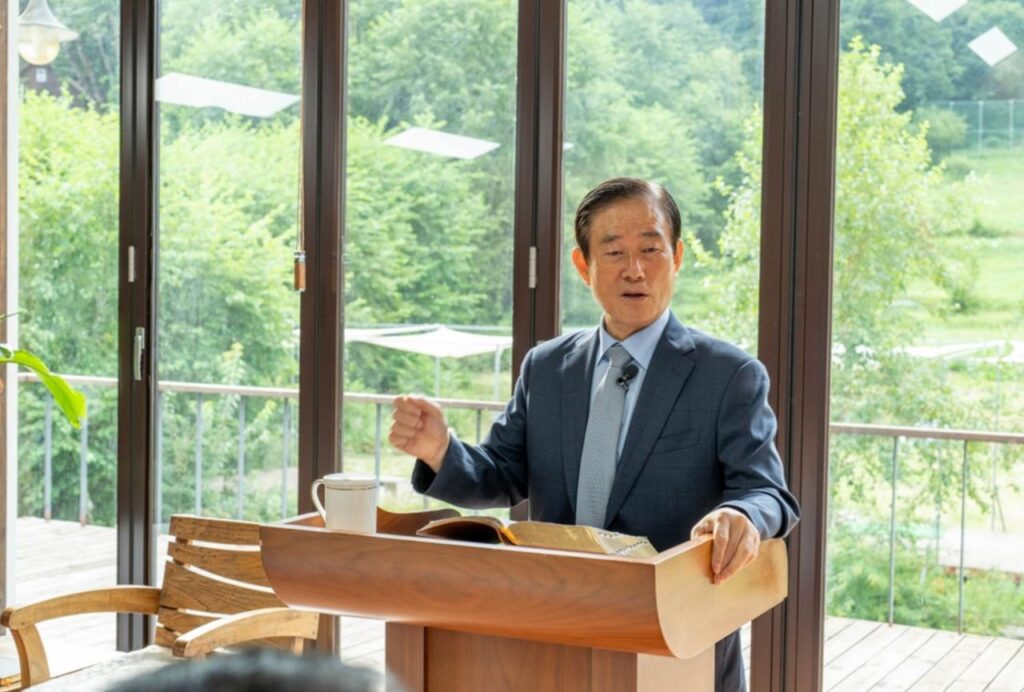
Pastor David Jang’s Meditation on Galatians (Olivet University):The Grace of the Holy Spirit and Freedom

Pastor David Jang

When one stands before El Greco’s Pentecost, it is not first the heavenly light descending like fire that catches the eye, but the faces of the people. Astonishment and fear, trembling and reverence all quiver within a single frame, yet their gaze ultimately converges on one center. Pastor David Jang’s meditation on Galatians speaks of the Holy Spirit in much the same way. The Holy Spirit is not an ornament added at the edges of faith, but the presence of God who breathes new life into the human soul and redirects the course of belief. Thus, the Spirit cannot be reduced to a moment of excitement or a special experience. The Spirit is understood as the living help who transforms the very structure of thought, rearranges the order of desire, and renews even the way we love and serve. The Holy Spirit is not merely one who heightens the atmosphere of worship, but one who patiently rewrites a person’s character and the culture of a community. The work of the Spirit described in this sermon is closer to endurance than explosion, to transformation than momentary sensation, and to the reconstitution of being rather than emotion.

Freedom is not license, but the order of a new life

The freedom spoken of in Galatians is not the release to do whatever one wants. It is the order by which the grace of redemption restores a person, and the beginning of repentance in which the heart that once clung to self-righteousness turns back to God. This sermon does not treat sin merely as a list of wrong actions. Sin is first a rupture with God, and that rupture twists the direction of desire, distorts the language of relationships, and eventually makes competition more familiar than love. Strife, jealousy, anger, and greed do not suddenly fall from the sky; they are the symptoms of a soul already collapsing within. Therefore, the gospel is not merely comfort that relieves guilt, but grace that restores broken relationship and opens the way to a new obedience. Without the Holy Spirit, faith easily hardens into the rigid shell of legalism or, conversely, scatters into emotion without a center. Yet the Spirit leads faith beyond both extremes and brings it back again to the relational center of being “in Christ.”

When the Word awakens from knowledge into life

One reason this exposition offers such profound theological insight is that it does not separate the Spirit from the Word. Zeal without the Word easily turns into self-assurance, while Bible meditation without the Spirit can harden into dry doctrine. But when the Holy Spirit illuminates the Word, familiar passages no longer remain mere information. They become living truth that pierces the heart, exposes hidden wounds and pride, and calls one to reconsider the choices of life. This is why the same verse may linger only in the mind on one day, and on another bring tears and redirect a life. This is precisely where the faith Pastor David Jang emphasizes begins. Hearing does not simply remain hearing; it ultimately leads to obedience that changes one’s life. The Word does not remain only a sword of judgment; it becomes a mirror that reflects the self, and before that mirror a person finally learns true repentance and new hope.

Fruit is not a sudden burst of fervor, but the long season of sanctification

In Galatians 5, the works of the flesh are presented in the plural, while the fruit of the Spirit is presented in the singular. This distinction shows that the fruit of the Spirit is not a list of isolated virtues, but an integrated character growing from one life. When love stands at the center, joy and peace follow; patience, kindness, and goodness reshape the texture of relationships; faithfulness, gentleness, and self-control renew the rhythm of life. What matters here is that fruit is not an ornament artificially attached, but something that grows from a transformed root. Sanctification is not a victory completed overnight. It is the journey of one who has already entered grace, yet slowly walks toward a holiness not yet completed. The habits of sin are long-established directions of the soul, and so they do not easily disappear through human resolve alone. But the Holy Spirit does not merely drive us harder to try more; the Spirit plants within us a new desire that makes possible choices once impossible. Therefore, hope does not grow from trusting our own determination, but from the help of the Spirit who lifts us up even in our stumbling. The conflict between the desires of the flesh and the desires of the Spirit is not in itself evidence of despair. Rather, that struggle may be a sign that the soul is still alive and that its longing for grace has not gone out. Just as the groaning in Romans ultimately moves toward hope, so the battle of faith is not a swamp of condemnation but a path that leads us to lean on God again. This is why the sermon’s definition of the righteous person is so deep: not one without blemish, but one who seeks once more to obey the leading of the Spirit. The fact that even failure can become material for sanctification offers the most realistic comfort to frail human beings. Self-control, too, is presented not as the language of suppression, but as the freedom that makes love possible. When the runaway force of desire is stilled, a person can finally see the needs of others, hear the pain of the community, and move into places of service.

Love ultimately becomes the face of the community

The fruit of the Spirit is not completed in isolation. Love is tested before others, peace is revealed in places of conflict, and self-control shines precisely in the moment when one empties oneself in order to preserve relationship. That is why Pastor David Jang speaks of the church as the temple of the Holy Spirit. It does not primarily mean the holiness of a building, but a community in which different people live out their oneness in the gospel. Spiritual gifts may make a person stand out, but without the fruit of love, faith easily becomes harsh. If the presence of the Spirit remains only a source of personal comfort, faith turns into a religion of self-care. But within the true work of the Spirit, a person is ultimately led toward service and sharing, forgiveness and reconciliation. In the end, the age of the Spirit is not an age that produces stronger people, but one that teaches holier love. The church is the place where that love is proven through relationships and the ethics of daily life. If faith is genuine, it must change the expression and language of the community. When gentleness grows in place of sharpness, service in place of self-display, and words of reconciliation in place of division, the gospel finally bears visible fruit. This order, in which character comes before gifts, poses a weighty yet lucid question to today’s church as well.

The question this sermon leaves at the end is simple, yet profound: are we trying to possess the Holy Spirit, or are we asking to be possessed by the Spirit? The gospel is not a power that makes us appear more impressive, but a grace that leads us back again to the Word, back again to choosing love, and back again to walking the path of obedience. Pastor David Jang’s meditation on Galatians does not speak lightly of freedom. True freedom begins only where the frenzy of desire comes to rest, and where a heart renewed before God opens toward its neighbor. Freedom is, in the end, the state in which one who has been grasped by God becomes able to love more deeply in the world. That freedom strips away self-display and flows outward in a love that gives life to others. Is our faith today resting in the safety of form, or is it being slowly renewed in the presence of the Holy Spirit? To remain long before that question may be the deepest biblical meditation this sermon leaves behind.

www.davidjang.org

Meditación sobre Gálatas del pastor David Jang (Olivet University): la gracia del Espíritu Santo y la libertad

pastor David Jang

Al detenerse frente a Pentecostés de El Greco, antes incluso que la luz celestial que desciende como fuego, lo primero que se percibe son los rostros de las personas. Sorpresa y temor, temblor y reverencia oscilan dentro de una misma escena, pero sus miradas terminan por converger en un solo centro. La meditación sobre Gálatas del pastor David Jang, fundador de Olivet University, explica precisamente así al Espíritu Santo. El Espíritu Santo no es un adorno añadido en los márgenes de la fe, sino la presencia de Dios que insufla al ser humano un aliento nuevo y cambia la dirección de su fe. Por eso no puede reducirse a una emoción momentánea o a una experiencia excepcional. Se le comprende como una ayuda viva que transforma la estructura del pensamiento, reordena la lógica de los deseos y renueva incluso la manera de amar y servir. El Espíritu Santo no es un ser que simplemente intensifica la atmósfera del culto, sino quien vuelve a tejer poco a poco el carácter de una persona y la cultura de una comunidad. La obra del Espíritu, tal como la presenta esta predicación, está más cerca de la transformación duradera que de la explosión, más cerca del cambio continuo que del instante, y más cerca de la reconfiguración del ser que de la mera emoción.

La libertad no es libertinaje, sino el orden de una vida nueva

La libertad de la que habla Gálatas no consiste en disfrutar sin límites de todo lo que uno desea. Es el orden por el cual la gracia de la redención vuelve a levantar al ser humano, y el comienzo del arrepentimiento en el que el corazón, antes aferrado a su propia justicia, se vuelve hacia Dios. La predicación no considera el pecado solo como una lista de actos equivocados. El pecado es, ante todo, ruptura con Dios; y esa ruptura tuerce la dirección del deseo, distorsiona el lenguaje de las relaciones y, finalmente, hace que la competencia resulte más familiar que el amor. Las contiendas, la envidia, la ira y la codicia no aparecen de repente; son síntomas de un alma que ya se estaba derrumbando por dentro. Por eso el evangelio no es solamente un consuelo que alivia la culpa, sino una gracia que restaura la relación quebrada y abre el camino hacia una obediencia nueva. Cuando falta el Espíritu Santo, la fe se endurece fácilmente en la cáscara rígida del legalismo o, por el contrario, se dispersa en emociones sin centro. Pero el Espíritu atraviesa ambos extremos y devuelve la fe al centro de la relación: “en Cristo”.

Cuando la Palabra despierta y pasa del conocimiento a la vida

Una de las razones por las que esta exposición ofrece una profunda intuición teológica es que no separa al Espíritu de la Palabra. El fervor sin Palabra fácilmente se desliza hacia la autosuficiencia, y la meditación bíblica sin Espíritu se endurece con facilidad en una doctrina seca. Pero cuando el Espíritu ilumina la Palabra, los pasajes conocidos dejan de ser simple información. Se convierten en verdad viva que hiere el corazón, saca a la luz heridas ocultas y orgullo escondido, y obliga a replantear las decisiones de la vida. Esa es la razón por la que, aun leyendo el mismo pasaje, algunos días permanece solo en la mente, mientras que en otros provoca lágrimas y cambia nuestro rumbo. La fe que enfatiza el pastor David Jang comienza precisamente aquí: en escuchar de tal manera que esa escucha no se quede estancada, sino que termine por conducir a una obediencia que transforma la vida. La Palabra no permanece únicamente como espada de juicio, sino que se vuelve un espejo que nos refleja a nosotros mismos; y ante ese espejo, la persona aprende por fin el arrepentimiento verdadero y una esperanza nueva.

El fruto no es un entusiasmo repentino, sino una larga estación de santificación

En Gálatas 5, las obras de la carne aparecen en plural, mientras que el fruto del Espíritu aparece en singular. Esta diferencia muestra que el fruto del Espíritu no es una simple enumeración de virtudes, sino un carácter integrado que brota de una sola vida. Cuando el amor ocupa el centro, le siguen el gozo y la paz; la paciencia, la benignidad y la bondad transforman la textura de las relaciones; y la fidelidad, la mansedumbre y el dominio propio renuevan el ritmo de la vida. Lo importante aquí es que el fruto no es un adorno impuesto a la fuerza, sino algo que crece a partir de un cambio en la raíz. La santificación no es una victoria consumada de la noche a la mañana. Es el camino por el cual quien ya ha entrado en la gracia avanza lentamente hacia una santidad todavía no consumada. Los hábitos del pecado son orientaciones antiguas, y por eso no desaparecen fácilmente solo con decisión humana. Pero el Espíritu Santo no se limita a empujarnos para que nos esforcemos más; Él implanta en nosotros un deseo nuevo que hace posibles elecciones que antes eran imposibles. Por eso la esperanza no nace de confiar en nuestra propia determinación, sino en la ayuda del Espíritu, que nos levanta aun en medio de las caídas. El hecho mismo de que exista un conflicto entre los deseos de la carne y los del Espíritu no es prueba de desesperación. Puede ser, más bien, una señal de que el alma sigue viva y de que el anhelo por la gracia no se ha extinguido. Así como el lamento en Romanos desemboca finalmente en esperanza, también la batalla de la fe no conduce al pantano de la condenación, sino a un nuevo abandono confiado en Dios. Por eso es profunda la definición que ofrece esta predicación: el justo no es quien está libre de toda mancha, sino quien vuelve a someterse a la guía del Espíritu. El hecho de que incluso la caída pueda convertirse en material para la santificación ofrece el consuelo más realista al ser humano frágil. También el dominio propio se presenta no como lenguaje de represión, sino como una libertad que hace posible el amor. Cuando se detiene el desenfreno del deseo, la persona puede por fin ver la necesidad del otro, escuchar el dolor de la comunidad y desplazarse hacia el lugar del servicio.

El amor acaba convirtiéndose en el rostro de la comunidad

El fruto del Espíritu no se completa en soledad. El amor se pone a prueba delante del otro, la paz se manifiesta en el lugar del conflicto, y el dominio propio resplandece precisamente en el momento en que uno se vacía para preservar la relación. Por eso el pastor David Jang habla de la iglesia como templo del Espíritu Santo. Esto no apunta tanto a la santidad de un edificio como a una comunidad en la que personas diferentes viven la unidad dentro del evangelio. Los dones pueden hacer destacar a una persona, pero sin el fruto del amor la fe fácilmente se vuelve áspera. Si la presencia del Espíritu se limita al consuelo individual, la fe se convierte en una religión de autocuidado; pero en la verdadera obra del Espíritu, la persona termina avanzando hacia el servicio, el compartir, el perdón y la reconciliación. En definitiva, la era del Espíritu no es la era que produce personas más fuertes, sino la que enseña un amor más santo. La iglesia es precisamente el lugar donde ese amor se demuestra en las relaciones y en la ética de la vida. Si la fe es genuina, necesariamente transformará el semblante y el lenguaje de la comunidad. Cuando en lugar de aspereza crece la mansedumbre, cuando en vez de exhibición personal surge el servicio, y cuando en lugar de ruptura nacen palabras de reconciliación, entonces el evangelio da por fin un fruto visible. Este orden, que sitúa el carácter por encima de los dones, lanza también a la iglesia de hoy una pregunta seria y luminosa.

La pregunta final que deja esta predicación es sencilla, pero profunda: ¿tratamos de poseer al Espíritu Santo, o pedimos ser cautivados por Él? El evangelio no es una fuerza que nos hace parecer personas más admirables, sino una gracia que nos hace volver una vez más a la Palabra, volver a elegir el amor y volver a caminar por la senda de la obediencia. La meditación sobre Gálatas del pastor David Jang no habla de la libertad de manera ligera. La verdadera libertad comienza cuando se detiene el desenfreno del deseo y un corazón renovado delante de Dios se abre hacia el prójimo. La libertad es, en última instancia, el estado en el que una persona aferrada por Dios puede amar más en medio del mundo. Esa libertad reduce la autoexaltación y fluye hacia un amor que da vida al prójimo. ¿Permanece hoy nuestra fe en la seguridad de las formas, o está siendo renovada poco a poco en la presencia del Espíritu? Permanecer largo tiempo ante esa pregunta es, quizá, la meditación bíblica más profunda que deja esta predicación.

www.davidjang.org

張ダビデ牧師(日本オリベットアッセンブリー教団)のガラテヤ書黙想、聖霊と自由の恵み

張ダビデ牧師

エル・グレコの《ペンテコステ》の前に立つとき、炎のように降り注ぐ天の光よりも先に、人々の顔が目に入る。驚きと恐れ、震えと畏敬が一つの画面の中で揺れているが、その視線はついに一つの中心へと集まっていく。張ダビデ牧師(日本オリベットアッセンブリー教団)のガラテヤ書黙想は、まさにその場面のように聖霊を語る。聖霊は信仰の周縁に付け加えられる装飾ではなく、人間の内に新しい息を吹き込み、信仰の方向を変えてくださる神の臨在である。だから聖霊は、一瞬の高揚や特別な体験へと縮小されない。思考の構造を変え、欲望の秩序を組み替え、愛し仕えるあり方にまで新しくしてくださる、生きた助けとして理解される。聖霊は礼拝の雰囲気だけを高める存在ではなく、一人の人格と共同体の文化をゆっくりと編み直していかれるお方である。説教が語る聖霊の働きは、爆発よりも持続、瞬間よりも変化、感情よりも存在そのものの再構成に、より近いものとして響いてくる。

自由は放ではなく、新しいいのちの秩序である
ガラテヤ書が語る自由は、したいことを思うままに享受する解放ではない。それは贖いの恵みが人を新たに立て上げる秩序であり、自分の義にしがみついていた心が神へと立ち返る悔い改めの始まりである。この説教は、罪をいくつかの誤った行為の一覧としてだけ見ない。罪とはまず神との断絶であり、その断絶は欲望の向きをねじ曲げ、関係の言葉を濁らせ、ついには愛よりも競争に慣れさせてしまう。争いとねたみ、怒りと貪欲は、突然降って湧いた結果ではなく、すでに内側で崩れ始めていた魂の徴候なのである。だから福音は、ただ罪責感を和らげる慰めではなく、断たれた関係を回復し、新しい従順への道を開く恵みである。聖霊がないとき、信仰はたやすく律法主義という固い殻になるか、逆に中心を失った感情として散ってしまう。しかし聖霊はその両極端を越えて、信仰を再び「キリストにあって」という関係の中心へと連れ戻してくださる。

御言葉が知識からいのちへと目めるとき
この講解が深い神学的洞察を与える理由は、聖霊と御言葉を切り離さないからである。御言葉のない熱心は、たやすく自己確信へと流れ、聖霊のない聖書黙想は、乾いた教理として固まってしまいやすい。しかし聖霊が御言葉を照らされるとき、慣れ親しんだ聖句はもはや情報のままでは残らない。それは人の心を刺し、隠された傷や高慢をあらわにし、人生の選択をもう一度問い直させる、生きた真理となる。同じ箇所を読んでも、ある日は頭の中だけを巡り、またある日は涙を呼び、進む方向を変えさせる理由がここにある。張ダビデ牧師が強調する信仰は、まさにここから始まる。ただ聞くだけにとどまらず、ついには人生を変える従順へとつながっていくのである。御言葉は裁きの剣としてだけ残るのではなく、自分自身を映す鏡となり、その鏡の前で人はようやく真実な悔い改めと新しい希望を学ぶ。

りは一度きりの熱狂ではなく、長い聖化の季節である
ガラテヤ書5章では、肉の業は複数形で、聖霊の実は単数形で示されている。この違いは、聖霊の実がいくつもの徳目の羅列ではなく、一つのいのちから育っていく統合された品性であることを示している。愛が中心に置かれるとき、喜びと平和がそれに続き、忍耐と慈愛と善意が人間関係の肌理を変え、誠実と柔和と自制が人生のリズムを新しくする。ここで重要なのは、実りが無理やり取りつける飾りではなく、根の変化から育つという事実である。聖化は、一朝一夕に完成される勝利ではない。すでに恵みのうちへと入れられた人が、なお完成していない聖さへ向かって、ゆっくりと歩んでいく旅路である。罪の習慣は長く続いた方向性であるゆえに、人間の決意だけでは簡単には消えない。しかし聖霊は、ただもっと努力しなさいと押しつけるのではなく、以前には不可能であった選択を可能にする新しい願いを植えつけてくださる。それゆえ希望は、自分の決意を信じるところから来るのではなく、倒れた中でも再び立ち上がらせてくださる聖霊の助けのうちに育つ。肉の欲望と聖霊の願いが衝突するという事実そのものが、絶望の証拠なのではない。むしろその戦いは、なお魂が生きており、恵みへの渇望が消えていないしるしかもしれない。ローマ書の嘆きがついには希望へと移っていくように、信仰の戦いもまた、断罪の沼ではなく、再び神に寄りかかるための通路となる。義人とは傷のない人ではなく、再び聖霊の導きに従おうとする人である、という説教の定義が深く響くのもそのためである。つまずきさえ終わりではなく、聖化の材料になりうるという事実は、弱い人間にとって最も現実的な慰めとなる。自制もまた、抑圧の言葉ではなく、愛を可能にする自由として示される。欲望の暴走が止まるとき、人はようやく他者の必要を見、共同体の痛みに耳を傾け、仕える場へと移っていくことができる。

愛はついに共同体の顔となる
聖霊の実は、一人だけで完成するものではない。愛は他者の前で試され、平和は葛藤の場であらわれ、自制は関係を守るために自分を空しくする瞬間にこそ輝く。だから張ダビデ牧師は、教会を聖霊の宮と語るのである。それは建物の聖さよりも、異なる人々が福音のうちに一つであることを生きる共同体を意味する。賜物は人を目立たせることがあっても、愛の実がなければ信仰はたやすく荒々しくなる。聖霊の臨在が個人の慰めにだけとどまるなら、信仰は自己ケアの宗教になってしまう。しかし真の聖霊の働きの中で、人はついに仕え合い、分かち合い、赦し合い、和解する場へと進んでいく。結局、聖霊の時代とは、より強い人をつくる時代ではなく、より聖なる愛を学ぶ時代である。教会はまさに、その愛が関係と生活の倫理によって証明される場所である。信仰が真実であるなら、それは必ず共同体の表情と言葉を変える。鋭さの代わりに柔和が、自己誇示の代わりに仕える心が、断絶の代わりに和解の言葉が育つとき、福音はようやく目に見える実を結ぶ。賜物よりも品性が先であるというこの秩序は、今日の教会にも重く、しかも澄んだ問いを投げかける。

この説教が最後に残す問いは単純でありながら深い。私たちは聖霊を所有しようとしているのか、それとも聖霊に捕らえられることを願っているのか。福音は、より立派な人に見せる力ではなく、再び御言葉へ立ち返らせ、再び愛を選ばせ、再び従順の道を歩ませる恵みである。張ダビデ牧師のガラテヤ書黙想は、自由を軽く語らない。真の自由は、欲望の暴走が止まり、神の前で新しくされた心が隣人へと開かれる場において、初めて始まる。自由とは結局、神に捕らえられた人が、この世の中でもっと愛することができる状態である。その自由は、自己誇示をそぎ落とし、隣人を生かす愛へと流れていく。今日、私たちの信仰は形式の安全さにとどまっているのか、それとも聖霊の臨在の中で少しずつ新しくされているのか。その問いの前に長くとどまることこそ、この説教が残す最も深い聖書黙想なのである。

www.davidjang.org

张大卫牧师(Olivet University)的加拉太书默想:圣灵与自由的恩典

张大卫牧师

站在埃尔·格列柯的《五旬节》前,最先映入眼帘的,并不是那如火降下的天光,而是画中众人的面容。惊讶、惧怕、战栗与敬畏,在同一幅画面中彼此摇动,但他们的目光最终都汇聚于一个中心。张大卫牧师(Olivet University)的《加拉太书》默想,正如这一幕般诠释圣灵。圣灵不是附加在信仰边缘的装饰,而是将新的气息吹入人里面、转变信心方向的神的临在。因此,圣灵不能被缩减为一时的激动或某种特殊体验。祂是活着的帮助者,更新人的思想结构,重新整理欲望的秩序,甚至改变人去爱与服事的方式。圣灵不是单单提升敬拜氛围的存在,而是那位慢慢重塑一个人的品格与一个群体文化的主。这篇讲道所说的圣灵工作,比起爆发更接近持久,比起瞬间更接近转变,比起情绪更接近存在本身的重新构成。

自由不是放,而是新生命的秩序

《加拉太书》所说的自由,并不是随心所欲的释放,而是救赎恩典重新建立人的秩序,是原本紧抓自义之心转向神的悔改起点。讲道并不只是把罪看作若干错误行为的清单。罪首先是与神的隔绝;而这种隔绝会扭曲欲望的方向,使关系中的语言失去纯净,最终让人对竞争比对相爱更感到熟悉。纷争、嫉妒、愤怒与贪欲,并不是突然坠下的结果,而是灵魂内部早已开始崩塌的征兆。因此,福音不只是减轻罪疚感的安慰,更是恢复断裂关系、开启全新顺服之路的恩典。没有圣灵时,信仰很容易变成律法主义坚硬的外壳,或者反过来,散落成没有中心的情绪。然而圣灵带人越过这两个极端,把信仰重新带回“在基督里”这一关系性的中心。

话语识苏生命

这篇讲解之所以带来深刻的神学洞见,是因为它并没有把圣灵与圣言分开。没有圣言的热心,很容易流于自我确信;没有圣灵的圣经默想,也很容易凝固成干枯的教义。然而,当圣灵光照圣言时,熟悉的经文便不再只是信息。它会刺透人的内心,揭露隐藏的伤口与骄傲,使人重新思索生命中的选择,成为活泼的真理。即使读的是同一段经文,有些日子只是停留在头脑里,有些日子却能使人流泪、改变方向,原因就在这里。张大卫牧师所强调的信心,正是从这里开始的:听见并不停留在听见,而是最终走向改变生命的顺服。圣言不只是成为审判的刀,也成为照见自己的镜子;人在这面镜子前,才真正学会真实的悔改与新的盼望。

果子不是一,而是漫的季

在《加拉太书》第五章中,“肉体的事”是复数,“圣灵的果子”却是单数。这一差异显示,圣灵的果子并不是多种美德的简单罗列,而是从同一个生命中长出来的整全品格。当爱居于中心时,喜乐与和平随之而来;恒久忍耐、恩慈与良善改变关系的质地;忠信、温柔与节制则重新塑造生活的节奏。这里重要的是,果子并不是勉强挂上的装饰,而是从根的改变中自然生长出来。成圣并不是一夜之间完成的胜利,而是已经进入恩典中的人,朝向尚未完全的圣洁缓缓前行的旅程。罪的习惯是一种长期形成的方向性,因此单靠人的决心很难轻易消失。然而,圣灵并不是只催逼人“再努力一点”,而是把过去不可能的选择,变成可以做出的新渴望。

所以,盼望不是来自相信自己的意志,而是来自圣灵在跌倒中仍再次扶起人的帮助。肉体的私欲与圣灵的心意彼此争战,这件事本身并不是绝望的证据;相反,那场争战也许正表明灵魂仍然活着,对恩典的渴慕并没有熄灭。正如《罗马书》中的叹息最终走向盼望,信仰中的争战也不是把人拖入定罪的泥沼,而是再次引人倚靠神。因此,讲道中对义人的定义格外深刻:义人不是毫无瑕疵的人,而是愿意再次顺服圣灵引导的人。连跌倒本身都不一定是终点,反而能够成为成圣的材料;这一事实,给软弱的人带来最现实的安慰。节制也不是压抑的语言,而是使爱成为可能的自由。当欲望的狂奔停下来时,人才能真正看见他人的需要,听见群体的伤痛,并走向服事的位置。

群体的面容

圣灵的果子并不是一个人独自完成的。爱是在他人面前受考验的;和平是在冲突之处显明的;节制则是在为了守护关系而愿意倒空自己的时刻,才真正发出光芒。因此,张大卫牧师称教会为圣灵的殿。这所指的,并不是建筑物本身的神圣,而是不同的人在福音中活出合一的群体。恩赐也许能让人显得突出,但若没有爱的果子,信仰就很容易变得粗糙。若圣灵的同在只停留在个人的安慰层面,信仰就会沦为一种自我照顾的宗教;但在真正的圣灵工作中,人最终会走向服事、分享、饶恕与和好的位置。说到底,圣灵的时代不是塑造更强势之人的时代,而是学习更圣洁之爱的时代。教会正是那份爱在关系中、在生活伦理中得以证明的地方。若信心是真实的,它必然会改变群体的表情与语言。当温柔取代尖锐,服事取代自我炫耀,和好的句子取代断裂的表达时,福音才真正结出可见的果子。恩赐之前,品格优先——这一秩序,也向今日的教会发出沉重而清澈的提问。

这篇讲道最后留下的问题,简单却深刻:我们是在试图拥有圣灵,还是在祈求被圣灵掌管?福音并不是让人看起来更了不起的力量,而是使人重新回到圣言、重新选择爱、重新走上顺服道路的恩典。张大卫牧师对《加拉太书》的默想,并没有轻率地谈论自由。真正的自由,是当欲望的失控止息,一个在神面前被更新的心开始向邻舍敞开时,才真正开始。自由终究是一种状态:一个被神抓住的人,在这世界中变得更能去爱。这样的自由会削弱自我夸耀,并流淌成使邻舍得生命的爱。

今天,我们的信仰是停留在形式的安全感里,还是正在圣灵的临在中一点点被更新?能够长久停留在这个问题之前,本身也许就是这篇讲道所留下的最深的圣经默想。

www.davidjang.org