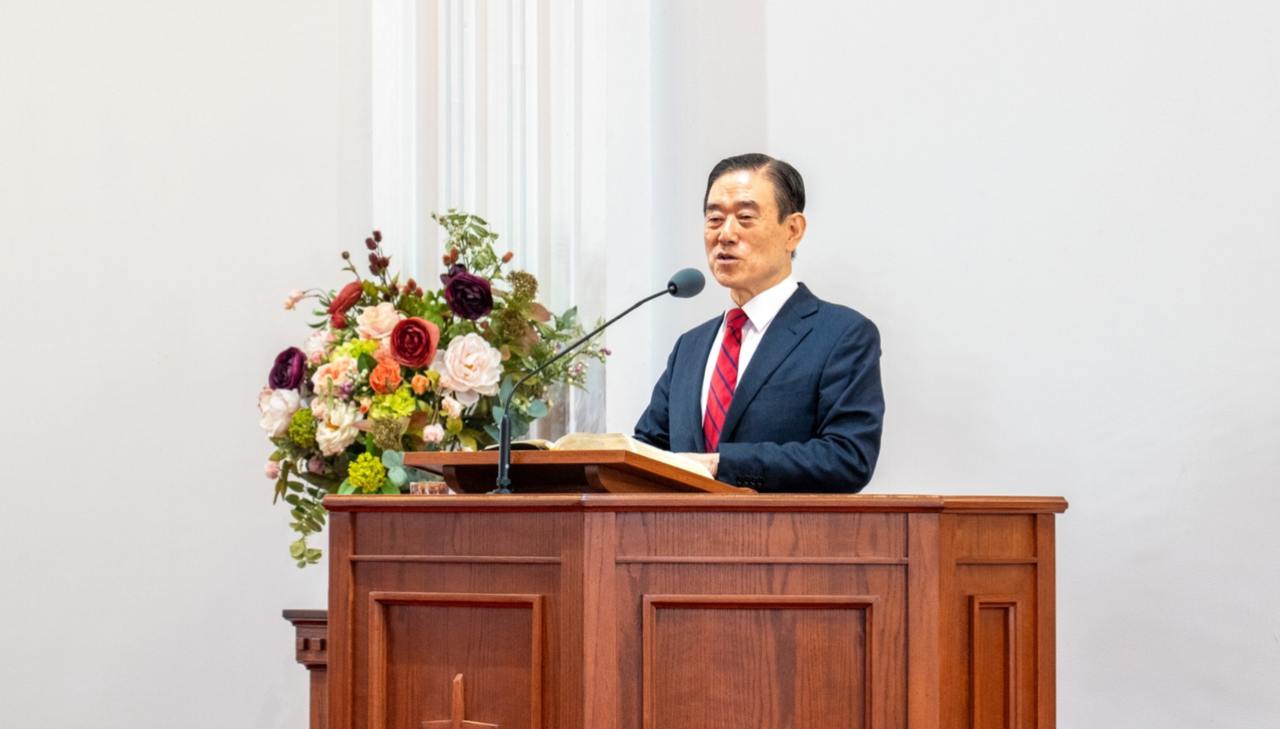
A man on his way to arrest Christians became a witness proclaiming Jesus Christ. Paul’s conversion in Acts 9 reveals how the Lord’s grace transformed one person’s convictions and purpose in life. In his sermon, Pastor David Jang, founder of Olivet University in the United States, traces how this transformation led to the proclamation of the gospel, the companionship of the Christian community, and a mission of caring for others. After professing our faith, where are our words and choices leading us?
Repentance Begins When We Surrender Our Own Certainties
Saul had both knowledge and zeal. Yet the task he intended to carry out on his journey from Jerusalem to Damascus was to arrest those who followed Jesus. Remaining true to our convictions does not necessarily mean we are heading in the right direction. The Lord intervened on that road, bringing Saul to surrender his own judgment before Jesus Christ, whom he had rejected.
The sermon interprets the moment when something like scales fell from Saul’s eyes as a picture of spiritual transformation, in which unbelief and familiar patterns of thought fall away. Even judgments once taken for granted come under fresh examination in the light of God’s Word. Conversion is a transformation in which we acknowledge Jesus Christ as Lord and entrust the direction of our lives to his Word. Repentance involves both honestly admitting our wrongdoing and changing our choices in keeping with that confession.
At the beginning of Saul’s conversion stands the grace of the Lord who sought him out first. The call he received while opposing the church helped him recognize where his understanding had gone wrong. If we regard repentance only as the burden of becoming better people through our own strength, we can easily lose sight of the Lord who turned Saul’s life around. A life of listening to the Word and obeying it begins afresh when someone who has tried to shoulder the entire responsibility for change learns to depend on the Lord.
This question also applies to our own meditation on Scripture. If we search only for verses that support conclusions we have already decided are right, we may read the Word while leaving our judgments unchanged. We also need to examine ourselves when we use the language of faith to pronounce a judgment before hearing someone out. Those who examine themselves in the light of the Word consider both the strength of their convictions and whom those convictions are leading them to follow.
Recognizing our wrongdoing, however, does not mean that we must remain trapped in our past. The grace that called Saul keeps us from prematurely ruling out anyone’s possibility of change. The sermon connects God’s plan with our calling because it locates the source of that calling in the Lord. Our attention shifts from boasting in our knowledge and experience, or dwelling only on our limited abilities, toward asking whom we can serve with what we have.
Sharing the Gospel We Have Received Without Delay
For Saul, this new direction soon became visible in his witness. After his conversion, he began proclaiming in the synagogues that Jesus is the Son of God and the Christ. The name he had once rejected had now become the message of salvation he was to share with others. The meaning of his conversion becomes clear both in what he left behind and in whom he came to trust and what he now lived for.
Pastor David Jang emphasizes here the importance of sharing the gospel without delay. Saul’s witness was driven by his conviction about who Jesus Christ is. When the Lord who atoned for our sins and rose from the dead remains at the center of the gospel, evangelism becomes an act of sharing with others the grace we have received. Even when we speak about the joys of church life or the benefits we have personally experienced, we need to preserve that focus so that those listening can come to know Jesus.
This calls for the wisdom to continue learning while putting our faith into practice. Alongside its encouragement to bear witness immediately, the sermon also emphasizes the study of Scripture, prayer, meditation, and discipleship. We may not yet be able to answer every question, but we can honestly share the gospel as we currently understand and believe it. A willingness to keep learning, without pretending to know what we do not, grows alongside the obedience that responds to opportunities to share the grace we have received.
When we reflect on conversations about faith, there is more to consider than how eloquently we spoke. Did we listen carefully to the other person’s questions? As we spoke about Jesus, did we become preoccupied with proving ourselves right? When opportunities arise to talk about faith at home or at work, we can explore together whatever the other person finds difficult to understand. When a clear knowledge of Scripture meets love for people, our witness becomes an invitation offered with respect.
A Basket and Barnabas: Keeping the Way Open for the Gospel
As Saul proclaimed the gospel, his life came under threat. He escaped Damascus by being lowered in a basket over the city wall, and opposition in Jerusalem later forced him to move elsewhere as well. Being called by the Lord did not remove the dangers ahead. Even as he bore witness boldly, Saul accepted the help of the community that sought to protect him. His example reminds us that acknowledging our weakness and accepting help are also part of the journey of faith for those who seek to fulfill their mission.
The disciples in Jerusalem faced another difficulty: they were afraid of Saul, who had once persecuted them. Barnabas then introduced him to the apostles and helped him find a place within the community. This scene shows that for a person’s transformation to be welcomed and nurtured within the church, people must do the work of bringing others together and helping trust grow.
We can remember that companionship as we welcome new believers into the church today. Along with encouragement to share the gospel, they need relationships in which someone will listen to their questions and struggles. If we ask only about ministry results, we may overlook the circumstances of those who are weary. If we remember only a person’s past, we may fail to recognize their efforts to live a new life. Providing a way of escape in times of danger and staying alongside people as their faith grows are responsibilities entrusted to the community.
The sermon considers Paul’s suffering alongside the peace of the church, drawing attention to how one person’s dedication can sustain the faith of others. Acts tells us that the church throughout Judea, Galilee, and Samaria grew in reverence for the Lord and in the comfort of the Holy Spirit. Remembering who sustains that growth keeps us from entrusting the church’s future to one person’s zeal alone. The transition from Saul’s story to Peter’s ministry also shows that God works through many people.
The Love Revealed in Peter’s Healings and Tabitha’s Garments
In Lydda, Peter met Aeneas, a man who had been unable to rise from his bed for eight years. Peter declared that Jesus Christ was making him well, clearly identifying the source of the healing. Our attention should rest on the Lord who restores life. When ministers put their own names first, they can draw people’s attention away from Jesus. Humility is needed even when mighty works are being done.
In Joppa, the account continues with Tabitha, who died and was brought back to life after Peter prayed. Many people learned of what had happened and came to believe in the Lord. The miracle turned people toward the Lord of life. As we read through Acts 9, we see that conversion, witness, and healing all point to Jesus Christ.
The way Tabitha had lived also shows what that faith looks like in practice. She was a disciple who made clothes for widows and the poor and gave generously to those in need. The garments she made invite us to reflect on how love attends to a person’s actual needs. We, too, can serve by sharing our time and skills or connecting people with the help they need. The value of the work that helps someone get through another day cannot be fully measured by visible results alone.
Pastor David Jang encourages prayer for healing while also respecting the work of medical professionals and appropriate treatment. Prayer for a sick person’s recovery carries with it the responsibility to attend to the discomfort and needs that person faces today. Even when healing is not evident, we must hold fast to faith and continue to care. Faith that glorifies the Lord is revealed in the way we continue to value and care for people in need.
This love also reaches beyond the boundaries the church has grown accustomed to. The sermon interprets Peter’s stay in the home of Simon the tanner as a foreshadowing of the mission to the Gentiles. The scene invites us to examine whether we have already limited whom we will approach with the gospel, allowing personal ties and cultural differences to set the boundaries. The church must move beyond its own comfort and seek ways to draw near to those who do not yet know the Lord. The sermon’s references to proclaiming the gospel across diverse cultures and through media also reflect this mission to come closer to people in the settings of their everyday lives.
The grace that redirected Saul’s steps on the road to Damascus also sheds light on our choices today. If we have put off an opportunity to speak about the gospel or passed by someone’s need, we can begin with a small act of obedience in that very place. With whom am I called to share the gospel today, and whom am I called to walk alongside and care for?